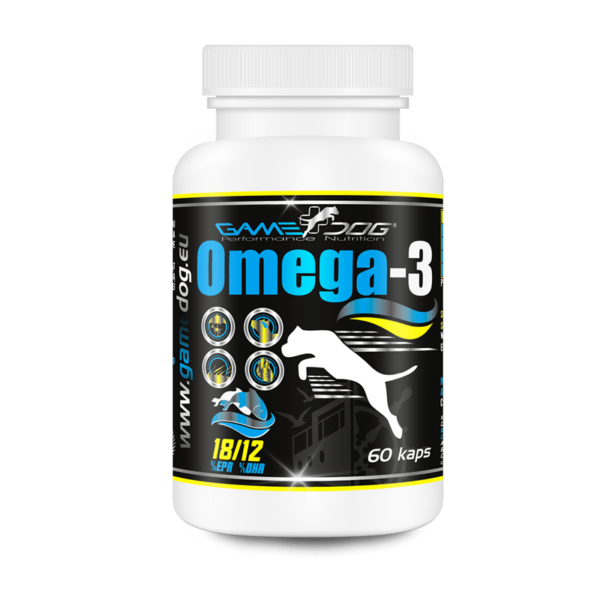

Omega-3 Fatty Acids
EPA and DHA fatty acids have a multifaceted, positive effect on the bodies of dogs and other pets.
Game Dog Omega-3
-
Supports processes that reduce inflammation
-
Has a neuroprotective effect
-
Podpira dietno terapijo za sklepne in kožne bolezni
-
Strengthens the heart and cardiovascular system
-
Alleviates the effects of chronic renal (kidney) failure
Pakiranje: 60 kapsul.
19.40 €
Specially recommended for: sports and working dogs, growing puppies, breeding dogs and bitches, dogs with reduced immunity and prone to allergies, and dogs suffering from degenerative diseases of the joints and spine.
- Strengthens the heart and cardiovascular system
- Supports liver regeneration
- Has a neuroprotective effect
- Has analgesic and anti-inflammatory effects
- Supports the treatment of degenerative and skin diseases (atopy, seborrhea)
- Alleviates allergy symptoms
- Improves the condition of the coat and skin
A complementary food for dogs, providing a source of highly concentrated EPA (eicosapentaenoic acid) and DHA (docosahexaenoic acid) belonging to the omega-3 fatty acid family. This product is recommended as del part of dietary therapy : kidney and liver failure, heart disease, neurodegenerative changes, and inflammation of the joints and spine. It also aids in the treatment of itchy skin conditions such as seborrhea, atopy, and allergic reactions. . EPA in DHA are recommended for preventive use in puppies and adult dogs, especially highly active dogs, breeding dogs, and those with weakened immune systems and a predisposition to allergies.
Essential omega-3 fatty acids have a multifaceted, positive effect on the bodies of dogs and other pets. EPA (eicosapentaenoic acid) and DHA (docosahexaenoic acid) play an important role in preventing and alleviating pathological changes, including inflammatory diseases. The soothing effect of omega-3 on inflammation in animals has long been studied, hence the realization that EPA and DHA are essential for the synthesis of mediators that inhibit inflammatory processes, including protectins and resolvins. Simultaneously, EPA and DHA limit the production of pro-inflammatory factors, including prostaglandins, leukotriene B4, and interleukin.
The effects of n-3 fatty acids on reducing inflammation are widely used in veterinary dietary therapy and nutritional prevention. Among the most common canine diseases treated with unsaturated omega-3 fatty acids are atopy and other itchy skin conditions. In dogs suffering from skin lesions and itching, supplementing the diet with EPA and DHA has shown significant improvement in skin and coat condition and a substantial reduction in itching. [1, 13, 17, 18]
EPA and DHA levels are considered crucial in the diet of dogs suffering from joint degeneration and can significantly improve their condition, in some cases even allowing for a reduction in the doses of painkillers or anti-inflammatory drugs the animal is taking [3, 7]. Studies have shown that omega-3 fatty acids inhibit the production of PGE2, IL-1β, IL-6, and TNF-α in dogs, effectively supporting processes that limit the inflammatory reactions accompanying osteoarthritis [4]. DHA can also be used to prevent osteoporosis, as it limits osteoclast activity and increases calcium content in bone tissue [11, 15].
Clinical studies in dogs with heart disease have confirmed that omega-3 fatty acids have a positive effect on heart muscle function, including cases of ventricular arrhythmia and atrial fibrillation [12, 20].
In animals receiving 1 g of eicosapentaenoic acid and docosahexaenoic acid daily, a significant improvement in cardiac physiological parameters was observed compared to dogs receiving a placebo [5].
For senior dogs, supplementing the diet with DHA is beneficial due to its neuroprotective properties. DHA has been shown to inhibit neuronal apoptosis during neurodegenerative diseases and aging processes in dogs [6, 14]. Research results also suggest that a lack of omega-3 fatty acids in a dog's diet may be linked to an increased tendency toward aggressive behavior [16].
Omega-3 polyunsaturated fatty acids are linked to a reduced tendency toward aggressive behavior [16].
Omega-3 polyunsaturated fatty acids are also very important in the nutrition of pregnant and lactating bitches and puppies [19, 21]. Both EPA and DHA play a key role in the proper development of the nervous system.
It has been proven that supplementing the diet of pregnant and lactating bitches and puppies with fish-derived omega-3 fatty acids has a beneficial effect on cognitive and motor skills [10]. DHA is also essential for the proper eye development of puppies, as confirmed by research [8]
Omega-3 fatty acids are also used in the dietary treatment of kidney failure in dogs. Studies have shown that the administration of EPA and DHA improves kidney function in dogs [2]. EPA and DHA inhibit the progression of nephron damage.
Deficiencies in EPA and DHA can increase the body's susceptibility to infections. Studies conducted on dogs of various ages have shown that supplementing their diet with unsaturated omega-3 fatty acids has a positive effect on immune system function [9].
A complementary food for dogs, providing a source of highly concentrated EPA (eicosapentaenoic acid) and DHA (docosahexaenoic acid) belonging to the omega-3 fatty acid family. This product is recommended as del part of dietary therapy : kidney and liver failure, heart disease, neurodegenerative changes, and inflammation of the joints and spine. It also aids in the treatment of itchy skin conditions such as seborrhea, atopy, and allergic reactions. . EPA in DHA are recommended for preventive use in puppies and adult dogs, especially highly active dogs, breeding dogs, and those with weakened immune systems and a predisposition to allergies.
Essential omega-3 fatty acids have a multifaceted, positive effect on the bodies of dogs and other pets. EPA (eicosapentaenoic acid) and DHA (docosahexaenoic acid) play an important role in preventing and alleviating pathological changes, including inflammatory diseases. The soothing effect of omega-3 on inflammation in animals has long been studied, hence the realization that EPA and DHA are essential for the synthesis of mediators that inhibit inflammatory processes, including protectins and resolvins. Simultaneously, EPA and DHA limit the production of pro-inflammatory factors, including prostaglandins, leukotriene B4, and interleukin.
The effects of n-3 fatty acids on reducing inflammation are widely used in veterinary dietary therapy and nutritional prevention. Among the most common canine diseases treated with unsaturated omega-3 fatty acids are atopy and other itchy skin conditions. In dogs suffering from skin lesions and itching, supplementing the diet with EPA and DHA has shown significant improvement in skin and coat condition and a substantial reduction in itching. [1, 13, 17, 18]
EPA and DHA levels are considered crucial in the diet of dogs suffering from joint degeneration and can significantly improve their condition, in some cases even allowing for a reduction in the doses of painkillers or anti-inflammatory drugs the animal is taking [3, 7]. Studies have shown that omega-3 fatty acids inhibit the production of PGE2, IL-1β, IL-6, and TNF-α in dogs, effectively supporting processes that limit the inflammatory reactions accompanying osteoarthritis [4]. DHA can also be used to prevent osteoporosis, as it limits osteoclast activity and increases calcium content in bone tissue [11, 15].
Clinical studies in dogs with heart disease have confirmed that omega-3 fatty acids have a positive effect on heart muscle function, including cases of ventricular arrhythmia and atrial fibrillation [12, 20].
In animals receiving 1 g of eicosapentaenoic acid and docosahexaenoic acid daily, a significant improvement in cardiac physiological parameters was observed compared to dogs receiving a placebo [5].
For senior dogs, supplementing the diet with DHA is beneficial due to its neuroprotective properties. DHA has been shown to inhibit neuronal apoptosis during neurodegenerative diseases and aging processes in dogs [6, 14]. Research results also suggest that a lack of omega-3 fatty acids in a dog's diet may be linked to an increased tendency toward aggressive behavior [16].
Omega-3 polyunsaturated fatty acids are linked to a reduced tendency toward aggressive behavior [16].
Omega-3 polyunsaturated fatty acids are also very important in the nutrition of pregnant and lactating bitches and puppies [19, 21]. Both EPA and DHA play a key role in the proper development of the nervous system.
It has been proven that supplementing the diet of pregnant and lactating bitches and puppies with fish-derived omega-3 fatty acids has a beneficial effect on cognitive and motor skills [10]. DHA is also essential for the proper eye development of puppies, as confirmed by research [8]
Omega-3 fatty acids are also used in the dietary treatment of kidney failure in dogs. Studies have shown that the administration of EPA and DHA improves kidney function in dogs [2]. EPA and DHA inhibit the progression of nephron damage.
Deficiencies in EPA and DHA can increase the body's susceptibility to infections. Studies conducted on dogs of various ages have shown that supplementing their diet with unsaturated omega-3 fatty acids has a positive effect on immune system function [9].
Available packaging: 60 capsules.
Active substances In 1 capsule :
EPA 180 mg
DHA 120 mg
Composition:
Fish oil 1000 mg
Vitamin E 2 mg - antioxidant
Shell composition
Fish gelatin, glycerol.
Average capsule weight: 1415.5 mg
Analytical constituents:
- Crude oils and fats 99,9 %
- Protein 0%
- Crude fibers 0%
- Crude ash 0%
10 kg – 1 capsule
20 kg – 2 capsules
30 kg – 3 capsules
It is recommended to use the product for at least three months.
In case of diagnosed chronic diseases, the target dose and duration of supplementation
should be discussed with a veterinarian.
Fish oil or krill oil?
Both are given as a diet supplement with unsaturated omega-3 fatty acids, which dogs cannot synthesize on their own. Fish oil, standardized for high EPA and DHA content, is a readily available source of fatty acids.
In addition to the beneficial EPA and DHA acids, krill oil also contains astaxanthin, which is responsible for clearing free radicals from the body, and phospholipids, which have regenerative properties for the liver. Both products are worth considering as part of dietary therapy for diseases of the internal organs, skin, or the musculoskeletal system. For economic reasons, fish oil is more affordable. However, it is important to know that krill oil is characterized by higher bioavailability. These products can also be used interchangeably.
When to give Omega-3 and when Omega Forte?
These two products differ in their EPA and DHA content. Omega Forte contains more of these fatty acids and is recommended as part of dietary therapy for musculoskeletal, skin, or internal organ disorders. Omega-3, on the other hand, due to its lower fatty acid content, is ideal for preventive care or for dogs and cats of small breeds. Omega Forte can also be used for the preventive care of large breed dogs, which allows for the administration of a smaller number of capsules.
Is fish oil contaminated?
All our oils have passed a series of quality analyses that exclude the possibility of heavy metals and other contaminants being present in the product, ensuring safe use.
Can this product be used in dogs with pancreatic disease or in obese dogs?
This oil can be used in patients with pancreatic disease because our oils contain a high concentration of EPA and DHA acids in a small amount of oil, so they will not be nutritionally significant relative to the total fat content in the diet.
Specially recommended for: sports and working dogs, growing puppies, breeding dogs and bitches, dogs with reduced immunity and prone to allergies, and dogs suffering from degenerative diseases of the joints and spine.
- Strengthens the heart and cardiovascular system
- Supports liver regeneration
- Has a neuroprotective effect
- Has analgesic and anti-inflammatory effects
- Supports the treatment of degenerative and skin diseases (atopy, seborrhea)
- Alleviates allergy symptoms
- Improves the condition of the coat and skin
A complementary food for dogs, providing a source of highly concentrated EPA (eicosapentaenoic acid) and DHA (docosahexaenoic acid) belonging to the omega-3 fatty acid family. This product is recommended as del part of dietary therapy : kidney and liver failure, heart disease, neurodegenerative changes, and inflammation of the joints and spine. It also aids in the treatment of itchy skin conditions such as seborrhea, atopy, and allergic reactions. . EPA in DHA are recommended for preventive use in puppies and adult dogs, especially highly active dogs, breeding dogs, and those with weakened immune systems and a predisposition to allergies.
Essential omega-3 fatty acids have a multifaceted, positive effect on the bodies of dogs and other pets. EPA (eicosapentaenoic acid) and DHA (docosahexaenoic acid) play an important role in preventing and alleviating pathological changes, including inflammatory diseases. The soothing effect of omega-3 on inflammation in animals has long been studied, hence the realization that EPA and DHA are essential for the synthesis of mediators that inhibit inflammatory processes, including protectins and resolvins. Simultaneously, EPA and DHA limit the production of pro-inflammatory factors, including prostaglandins, leukotriene B4, and interleukin.
The effects of n-3 fatty acids on reducing inflammation are widely used in veterinary dietary therapy and nutritional prevention. Among the most common canine diseases treated with unsaturated omega-3 fatty acids are atopy and other itchy skin conditions. In dogs suffering from skin lesions and itching, supplementing the diet with EPA and DHA has shown significant improvement in skin and coat condition and a substantial reduction in itching. [1, 13, 17, 18]
EPA and DHA levels are considered crucial in the diet of dogs suffering from joint degeneration and can significantly improve their condition, in some cases even allowing for a reduction in the doses of painkillers or anti-inflammatory drugs the animal is taking [3, 7]. Studies have shown that omega-3 fatty acids inhibit the production of PGE2, IL-1β, IL-6, and TNF-α in dogs, effectively supporting processes that limit the inflammatory reactions accompanying osteoarthritis [4]. DHA can also be used to prevent osteoporosis, as it limits osteoclast activity and increases calcium content in bone tissue [11, 15].
Clinical studies in dogs with heart disease have confirmed that omega-3 fatty acids have a positive effect on heart muscle function, including cases of ventricular arrhythmia and atrial fibrillation [12, 20].
In animals receiving 1 g of eicosapentaenoic acid and docosahexaenoic acid daily, a significant improvement in cardiac physiological parameters was observed compared to dogs receiving a placebo [5].
For senior dogs, supplementing the diet with DHA is beneficial due to its neuroprotective properties. DHA has been shown to inhibit neuronal apoptosis during neurodegenerative diseases and aging processes in dogs [6, 14]. Research results also suggest that a lack of omega-3 fatty acids in a dog's diet may be linked to an increased tendency toward aggressive behavior [16].
Omega-3 polyunsaturated fatty acids are linked to a reduced tendency toward aggressive behavior [16].
Omega-3 polyunsaturated fatty acids are also very important in the nutrition of pregnant and lactating bitches and puppies [19, 21]. Both EPA and DHA play a key role in the proper development of the nervous system.
It has been proven that supplementing the diet of pregnant and lactating bitches and puppies with fish-derived omega-3 fatty acids has a beneficial effect on cognitive and motor skills [10]. DHA is also essential for the proper eye development of puppies, as confirmed by research [8]
Omega-3 fatty acids are also used in the dietary treatment of kidney failure in dogs. Studies have shown that the administration of EPA and DHA improves kidney function in dogs [2]. EPA and DHA inhibit the progression of nephron damage.
Deficiencies in EPA and DHA can increase the body's susceptibility to infections. Studies conducted on dogs of various ages have shown that supplementing their diet with unsaturated omega-3 fatty acids has a positive effect on immune system function [9].
A complementary food for dogs, providing a source of highly concentrated EPA (eicosapentaenoic acid) and DHA (docosahexaenoic acid) belonging to the omega-3 fatty acid family. This product is recommended as del part of dietary therapy : kidney and liver failure, heart disease, neurodegenerative changes, and inflammation of the joints and spine. It also aids in the treatment of itchy skin conditions such as seborrhea, atopy, and allergic reactions. . EPA in DHA are recommended for preventive use in puppies and adult dogs, especially highly active dogs, breeding dogs, and those with weakened immune systems and a predisposition to allergies.
Essential omega-3 fatty acids have a multifaceted, positive effect on the bodies of dogs and other pets. EPA (eicosapentaenoic acid) and DHA (docosahexaenoic acid) play an important role in preventing and alleviating pathological changes, including inflammatory diseases. The soothing effect of omega-3 on inflammation in animals has long been studied, hence the realization that EPA and DHA are essential for the synthesis of mediators that inhibit inflammatory processes, including protectins and resolvins. Simultaneously, EPA and DHA limit the production of pro-inflammatory factors, including prostaglandins, leukotriene B4, and interleukin.
The effects of n-3 fatty acids on reducing inflammation are widely used in veterinary dietary therapy and nutritional prevention. Among the most common canine diseases treated with unsaturated omega-3 fatty acids are atopy and other itchy skin conditions. In dogs suffering from skin lesions and itching, supplementing the diet with EPA and DHA has shown significant improvement in skin and coat condition and a substantial reduction in itching. [1, 13, 17, 18]
EPA and DHA levels are considered crucial in the diet of dogs suffering from joint degeneration and can significantly improve their condition, in some cases even allowing for a reduction in the doses of painkillers or anti-inflammatory drugs the animal is taking [3, 7]. Studies have shown that omega-3 fatty acids inhibit the production of PGE2, IL-1β, IL-6, and TNF-α in dogs, effectively supporting processes that limit the inflammatory reactions accompanying osteoarthritis [4]. DHA can also be used to prevent osteoporosis, as it limits osteoclast activity and increases calcium content in bone tissue [11, 15].
Clinical studies in dogs with heart disease have confirmed that omega-3 fatty acids have a positive effect on heart muscle function, including cases of ventricular arrhythmia and atrial fibrillation [12, 20].
In animals receiving 1 g of eicosapentaenoic acid and docosahexaenoic acid daily, a significant improvement in cardiac physiological parameters was observed compared to dogs receiving a placebo [5].
For senior dogs, supplementing the diet with DHA is beneficial due to its neuroprotective properties. DHA has been shown to inhibit neuronal apoptosis during neurodegenerative diseases and aging processes in dogs [6, 14]. Research results also suggest that a lack of omega-3 fatty acids in a dog's diet may be linked to an increased tendency toward aggressive behavior [16].
Omega-3 polyunsaturated fatty acids are linked to a reduced tendency toward aggressive behavior [16].
Omega-3 polyunsaturated fatty acids are also very important in the nutrition of pregnant and lactating bitches and puppies [19, 21]. Both EPA and DHA play a key role in the proper development of the nervous system.
It has been proven that supplementing the diet of pregnant and lactating bitches and puppies with fish-derived omega-3 fatty acids has a beneficial effect on cognitive and motor skills [10]. DHA is also essential for the proper eye development of puppies, as confirmed by research [8]
Omega-3 fatty acids are also used in the dietary treatment of kidney failure in dogs. Studies have shown that the administration of EPA and DHA improves kidney function in dogs [2]. EPA and DHA inhibit the progression of nephron damage.
Deficiencies in EPA and DHA can increase the body's susceptibility to infections. Studies conducted on dogs of various ages have shown that supplementing their diet with unsaturated omega-3 fatty acids has a positive effect on immune system function [9].
Available packaging: 60 capsules.
Active substances In 1 capsule :
EPA 180 mg
DHA 120 mg
Composition:
Fish oil 1000 mg
Vitamin E 2 mg - antioxidant
Shell composition
Fish gelatin, glycerol.
Average capsule weight: 1415.5 mg
Analytical constituents:
- Crude oils and fats 99,9 %
- Protein 0%
- Crude fibers 0%
- Crude ash 0%
10 kg – 1 capsule
20 kg – 2 capsules
30 kg – 3 capsules
It is recommended to use the product for at least three months.
In case of diagnosed chronic diseases, the target dose and duration of supplementation
should be discussed with a veterinarian.
Fish oil or krill oil?
Both are given as a diet supplement with unsaturated omega-3 fatty acids, which dogs cannot synthesize on their own. Fish oil, standardized for high EPA and DHA content, is a readily available source of fatty acids.
In addition to the beneficial EPA and DHA acids, krill oil also contains astaxanthin, which is responsible for clearing free radicals from the body, and phospholipids, which have regenerative properties for the liver. Both products are worth considering as part of dietary therapy for diseases of the internal organs, skin, or the musculoskeletal system. For economic reasons, fish oil is more affordable. However, it is important to know that krill oil is characterized by higher bioavailability. These products can also be used interchangeably.
When to give Omega-3 and when Omega Forte?
These two products differ in their EPA and DHA content. Omega Forte contains more of these fatty acids and is recommended as part of dietary therapy for musculoskeletal, skin, or internal organ disorders. Omega-3, on the other hand, due to its lower fatty acid content, is ideal for preventive care or for dogs and cats of small breeds. Omega Forte can also be used for the preventive care of large breed dogs, which allows for the administration of a smaller number of capsules.
Is fish oil contaminated?
All our oils have passed a series of quality analyses that exclude the possibility of heavy metals and other contaminants being present in the product, ensuring safe use.
Can this product be used in dogs with pancreatic disease or in obese dogs?
This oil can be used in patients with pancreatic disease because our oils contain a high concentration of EPA and DHA acids in a small amount of oil, so they will not be nutritionally significant relative to the total fat content in the diet.
- Abba, Mussa P., VercelliA., Raviti G.: Dodatek esencialnih maščobnih kislin pri psih z atopično boleznijo v različnih fazah, hranjenih z nadzorovano prehrano. JAnim PhysiolAnim Nutr (Berl) 2005, 89, 2003–2007.
- Brown SA, Brown CA, Crowell WA, Barsanti JA, Allen T., Cowell C., Finco DR: Koristni učinki kroničnega dajanja prehranskih omega-3 polinenasičenih maščobnih kislin pri psih z ledvično boleznijo J Lab Clin Med. 1998, 131(5), 447-55.
- Budsberg SC, Bartges JW: Prehrana in osteoartritis pri psih: ali pomaga? Vet. Clin. North Am. SmallAnim. Pract. 2006, 36, 1307-1323.
- Calder PC, Zurier RB: Polinenasičene maščobne kisline in revmatoidni artritis. Curr Opin Clin Nutr Metab Care 2001, 4, 115–121.
- Dove RS: Prehranska terapija pri zdravljenju srčnih bolezni pri psih. Altern. Med. Rev.
- Suppl, 2001, S38–45. 6. Floren S., Malaplate-Armand C., Youssef I., Kriem B., Koziel V., Escanye MC, FifreA., Sponne I., Leininger Muller B., Olivier JL, Pillot T., OsterT.: Dokozaheksaenojska kislina preprečuje nevronsko apoptozo, ki jo povzročajo topni beta-amiloidni oligomeri. J. Neurochem. 2006, 96, 385–395.
- Fritsch DA, Allen TA, Dodd CE, Jewell DE, Sixby KA, Leventhal PS, Brejda J., Hahn KA: Ulticentrična študija o vplivu prehranskih dopolnil z omega-3 maščobnimi kislinami ribjega olja na odmerek karprofena pri psih z osteoartritisom. J Am Vet Med. Assoc., 2010, 236 (5), 535-539.
- Heinemann KM, Waldron MK, Bigley KE, Lees GE, Bauer JE: Dolgoverižne (n-3) polinenasičene maščobne kisline so učinkovitejše od alfa-linolenske kisline pri izboljšanju elektroretinogramskih odzivov mladičkov, izpostavljenih med brejostjo, laktacijo in odstavitvijo. J Nutr. 2005, 135(8), 1960-6.
- Kearns RJ, Hayek MG, Turek JJ, Meydani M, Burr JR, Greene RJ, Marshall CA, Adams SM, Borgert RC, Reinhart GA: Vpliv starosti, pasme in razmerja med maščobnimi kislinami omega-6 (n-6) in omega-3 (n-3) v prehrani na imunsko delovanje, proizvodnjo eikozanoidov in lipidno peroksidacijo pri mladih in starih psih. Vet. lmmunol. lmmunopathol. 1999, 69, 165-183.
- Kelley RL, Lepine AJ, Burr JR, Shyan-Norwalt M, Reinhart GA: Vpliv ribjega olja v prehrani na sposobnost mladičkov za trening. 6. kongres Mednarodnega združenja za preučevanje maščobnih kislin in lipidov, 2004, Brighton, Združeno kraljestvo.
- Kruger MC, Schollum LM: Ali je dokozaheksaenojska kislina učinkovitejša od eikozapentaenojske kisline za povečanje biološke uporabnosti kalcija? Prostaglandins Leukot. Essen!. Fatty Acids 2005, 73, 327-334.
- Laurent G., Moe G., Hu Cardiovasc Res. 2008, 77, 89–97.
- Logas D., Kunkle GA: Dvojno slepa navzkrižna študija z dodatkom morskega olja, ki vsebuje visoke odmerke ikosapentaenojske kisline, za zdravljenje srbeče kožne bolezni pri psih. Vet Dermatol. 1994, 5, 99-104.
- Menard C., Patenaude C., GagneA.M., Massicotte G.: Dokozaheksaenojska kislina zmanjša smrt jegulj, ki jo povzročajo receptorji AMPA, ne pa tudi eikozapentaenojska kislina v območju CA1 kultur hipokampalnih rezin. J Neurosci. Res., 2009, 87, 876–886.
- Rahman MM, Bhattacharya A., Fernandes G.: Dokozaheksaenojska kislina je močnejši zaviralec diferenciacije osteoklastov v celicah RAW 264.7 kot eikozapentaenojska kislina. J. Cell.Physiol. 2008, 214, 201–209.
- Re S., Zanoletti M., Emanuele E.: Za agresivne pse je značilno nizko stanje omega-3 polinenasičenih maščobnih kislin. Vet. Res. Commun. 2008, 32, 225-230
- Scott D.W., Miller W.H. Jr.: Nesteroidna protivnetna zdravila pri zdravljenju alergijskega srbenja pri psih. JS Afr. Vet. Assoc. 1993, 64, 52–56.
- Scott D.W., Miller W.H. Jr., Reinhart GA, Mohammed HO, Bagladi MS: Učinek komercialne prehrane z jagnjetino in rižem, ki vsebuje omega-3/omega-6 maščobne kisline, na srbenje pri atopičnih psih: rezultati enojno slepe študije. Can. J. Vet. Res. 1997, 61, 145-153.
- Singh M.: Esencialne maščobne kisline, DHA in človeški možgani. Indian J. Pediatr. 2005, 72, 239–242.
- Smith CE, Freeman LM, Rush EJ, Cunnigham MS, Eiourge V.: Omega-4 maščobne kisline pri boksarjih z aritmogeno kardiomiopatijo desnega prekata. J Vet Intern Med., 2007.21(2), 265-73.
- Yashodhara BM, Umakanth S., Pappachan JM, BhatS.K., Karnath R., Choo BH: Omega-3 maščobne kisline: celovit pregled njihove vloge pri zdravju in bolezni. Podiplomski medicinski časopis 2009, 85, 84–90
Anka & Tajga
Anka & Tajga Tajga loves the capsules; they are her “gummy candies.” Her coat looks more beautiful, her skin is not as dry, and the dandruff has disappeared. I don’t know about her immunity, as she never had problems with it before, but autumn is just around the corner. We recommend!
robertsmolka
The coat and skin look fantastic. I recommend it.
Aleksander
the coat looks much better, no signs of skin changes. I recommend it.
Pati
My German Shepherd has an excellent shiny coat; she used to shed a lot before. She likes the Omega, her joints have become stronger, and she limps less.
Related products


Taste of the Wild – Southwest Canyon z divjim prašičem

Taste of the Wild – Pacific Stream z lososom za odrasle pse